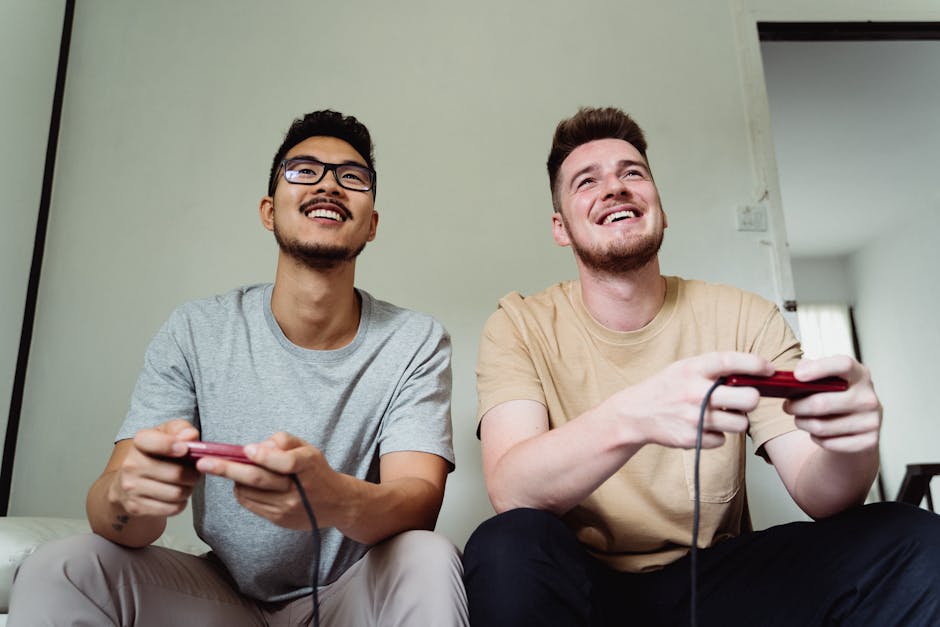
For a period in the mid-2010s, it genuinely seemed like local multiplayer was dying. Online gaming had matured to the point where playing with friends no longer required physical proximity. Big living room televisions had given way to personal monitors and gaming laptops. The industry was moving toward experiences designed for individual players in individual spaces, connected digitally but physically separate.
The obituaries were premature. Local multiplayer is not just surviving. It is one of the most actively growing segments of gaming right now, driven by a combination of demographic shifts, platform decisions, and a cultural reconsideration of what gaming can be as a social activity in a physical space.
1. What Drove Local Multiplayer’s Supposed Decline
Understanding the comeback requires understanding why local multiplayer appeared to be declining in the first place. Several genuine forces were pulling against it through the late 2000s and into the 2010s.
Online gaming infrastructure improved to the point where playing with friends no longer required coordination in physical space. The friction of arranging to be in the same room at the same time is substantially higher than sending a friend request and joining a lobby. As online gaming became more reliable and more social, the practical case for local play weakened for games where online could substitute.
The rise of smartphone gaming created a competing model for casual social gaming that did not require a shared screen. Games like Words with Friends or the early mobile hits demonstrated that social gaming could happen asynchronously across physical distance in ways that fit naturally into busy adult schedules.
Game design itself shifted toward experiences optimized for individual engagement: open worlds, narrative games, online competitive multiplayer. These genres are excellent at what they do but not naturally suited to the shared screen, split-attention dynamics of local co-op.
2. The Nintendo Switch as Local Multiplayer’s Champion
No single factor has done more to revive local multiplayer than the Nintendo Switch and its distinctive design philosophy. The Switch’s detachable Joy-Con controllers, which allow two players to share a single console with minimal setup, and its portability, which makes it natural to bring to a friend’s house or set up in any space, were explicitly designed to enable shared play.
Nintendo’s software library for the Switch has consistently prioritized local multiplayer in ways that other platform holders have not. Mario Kart 8 Deluxe, Super Smash Bros. Ultimate, Nintendo Switch Sports, and dozens of other titles are designed around the assumption that players will be in the same room together. These are not games with a local option added as an afterthought. They are games designed from the ground up for shared physical space.
The Switch’s commercial success, with over 140 million units sold as of 2023 making it one of the best-selling consoles ever, demonstrated that the market for local multiplayer experiences was larger than the industry had estimated. The Switch’s sales data showed strong performance in non-traditional gaming demographics, including older players and families, suggesting that local multiplayer was reaching people who had not been well-served by the online-first approach of competing platforms.
3. The Indie Game Contribution to Local Multiplayer Revival
While Nintendo was making institutional decisions to prioritize local multiplayer, independent developers were quietly building some of the most beloved local multiplayer experiences in gaming history.
Lovers in a Dangerous Spacetime, released in 2015, brought cooperative local play with a level of warmth and visual charm that made it a natural choice for couples and friends discovering gaming together. Overcooked, released in 2016, became a cultural phenomenon precisely because its chaotic cooperative cooking gameplay produced exactly the kind of shared laughter and playful argument that defines memorable local gaming sessions.
Gang Beasts, Ultimate Chicken Horse, TowerFall Ascension, and Boomerang Fu are all games that exist primarily to be played by people in the same room, laughing and competing in physical proximity. These games understand that local multiplayer is not just a feature but an experience design philosophy, one that prioritizes immediate, accessible fun over depth, progression, or competitive balance.
The commercial success of these titles, often disproportionate to their production budgets, confirmed that local multiplayer audiences were large and underserved. Players were actively seeking experiences designed for shared physical play and finding relatively little of it from major studios.
4. The Social Context That Made Comeback Inevitable
Gaming’s supposed decline of local multiplayer coincided with a broader cultural moment that made shared screen play less practical: the period of individualized, on-demand entertainment consumption where everyone in a household might be watching different content on different devices simultaneously.
What has followed is a partial but significant cultural reconsideration of shared experience as a deliberate value rather than a default. Families who recognize that everyone looking at their own screen all evening is not actually connecting are actively seeking activities that bring physical presence into genuine interaction. Board game culture has experienced a significant renaissance for similar reasons. Escape rooms became a major leisure category. Group activities that require physical co-presence and genuine interaction are growing across multiple entertainment segments.
Local gaming fits naturally into this cultural moment. A Switch set up in a living room, with Joy-Cons passed around and a game that anyone can learn in five minutes, is a fundamentally social object in a way that individual gaming setups are not.
5. The Design Language of Great Local Multiplayer
The best local multiplayer games share design principles that are worth understanding because they reveal something important about what makes shared physical play satisfying.
Immediate accessibility matters more than depth. A game that requires a twenty-minute tutorial before new players can participate destroys the social spontaneity that local multiplayer depends on. The best local games can be learned in minutes, with depth available for players who want it but never required for enjoyment from the first session.
Asymmetric information and outcomes create comedy. Games where players can see each other’s reactions, where unexpected things happen that everyone present can appreciate simultaneously, and where the gap between intention and outcome is wide enough to be funny produce the shared laughter that makes local gaming memorable. Overcooked’s chaos is not a design failure. It is the product.
Clear causality prevents frustration from becoming conflict. In competitive local games, players need to understand why they lost. If a player feels they were cheated by unclear rules or arbitrary systems rather than outplayed by their opponent, the social experience degrades quickly. The best competitive local games produce the reaction “you got me” rather than “that was unfair.”
6. The Party Game Renaissance and New Formats
The Jackbox Party Pack series deserves specific recognition as an innovation in local multiplayer format. By using players’ smartphones as controllers and a shared screen for the game experience, Jackbox removed the hardware barrier to local multiplayer entirely. Anyone with a phone can join a Jackbox game on any screen, making it uniquely accessible for gatherings that include non-gamers.
The success of Jackbox demonstrated that local multiplayer’s potential audience was significantly larger than the population of people who owned controllers and knew how to use them. It created a template for games designed as social experiences first, with gaming mechanics in service of group entertainment rather than the reverse.
Similarly, games like Keep Talking and Nobody Explodes, which divides information between players in ways that require verbal communication to solve problems, have expanded what local multiplayer can be beyond sharing a screen to play the same game toward creating experiences that use physical proximity and communication as core mechanics.
7. What the Local Multiplayer Revival Means for the Industry
The revival of local multiplayer has commercial implications that extend beyond the games market. It has contributed to a reconsideration of gaming as a living room and social activity after years of it being positioned primarily as a personal bedroom or office activity.
The gaming furniture, display technology, and peripheral markets have all seen product development oriented toward shared living room gaming experiences. The social gaming café category has grown in multiple markets, providing spaces for local multiplayer that apartments do not always permit. And gaming’s positioning in the broader leisure market has expanded to include explicitly social and family-oriented contexts that were underserved during the online-first period.
Conclusion
Local multiplayer’s comeback is not a nostalgic retreat but a forward-looking response to real social needs that online gaming cannot fully serve. The shared laughter, the friendly argument over a questionable play, the spontaneous competitive moment among people who are physically present together, these are experiences that digital connection approximates but does not replicate. The games, platforms, and cultural conditions that are supporting local multiplayer’s revival are not fighting against the direction of gaming. They are serving the part of human social experience that all the technology in the world has not yet found a way to make optional.
Last modified: June 2, 2026