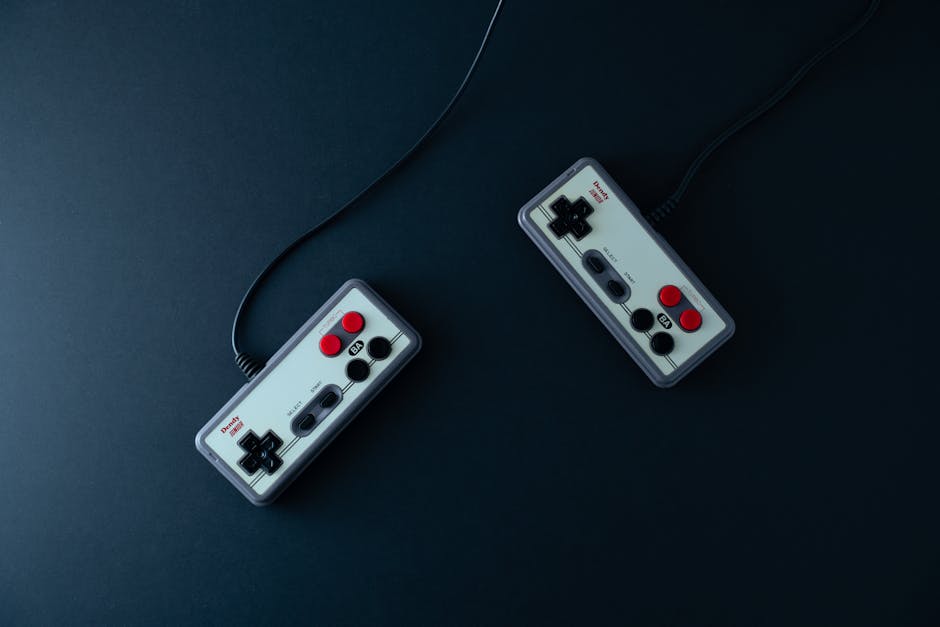
Walk into any gaming convention today and you will find something that would have surprised observers a decade ago. Alongside the latest releases and newest hardware, vintage consoles and cartridges from the 1980s and 1990s are selling for prices that would have seemed absurd when those products were new. A sealed copy of The Legend of Zelda for the original Nintendo Entertainment System sold at auction in 2021 for over 870,000 dollars. Original Nintendo cartridges that sat in garage sale boxes for a dollar are now routinely listed for hundreds.
The retro gaming market is booming. But understanding why requires separating two distinct phenomena that are often conflated: the speculative collectibles market that has driven headline prices, and the genuine, sustained interest in playing older games that tells a more interesting story about quality, design, and what players actually value in games.
1. Two Different Retro Gaming Markets
The auction records that generate news coverage represent a collectibles market driven by speculation, scarcity, and nostalgia investment rather than playing. Sealed, graded copies of classic games function more like trading cards or sports memorabilia than entertainment products. The people paying six figures for a sealed Super Mario Bros. cartridge are not buying it to play it.
The playing market is a separate and more interesting phenomenon. Steam’s most downloaded classic titles, the sustained sales of Nintendo’s Virtual Console and Nintendo Switch Online library, the commercial success of dedicated retro hardware like the NES Classic and SNES Classic, and the active communities around emulation all speak to genuine demand for playing older games rather than merely owning them as collectibles.
These two markets have different drivers and different implications. The collectibles market tells you about nostalgia economics and speculative investment. The playing market tells you something more revealing about what makes games good and why certain experiences retain their value across decades.
2. The Design Principles That Have Aged Well
The most honest answer to whether retro games represent genuine quality requires examining which aspects of older games have aged well and which have not. The picture is genuinely mixed.
What has aged exceptionally well is game feel: the tactile satisfaction of controls that are responsive, precise, and physically engaging. Super Mario Bros.’ jump physics, refined over decades of iteration, feel immediately satisfying to players who have never experienced them before. The fundamental design of Tetris, with its clean systems and escalating challenge, is as compelling today as it was in 1984. Pac-Man’s core loop of movement, collection, and pursuit remains inherently engaging.
These games work because they were designed around constraints that forced clarity. With limited processing power, storage, and memory, developers could not rely on production values, narrative complexity, or content volume to carry the experience. Every element had to earn its place through pure design quality. That enforced discipline produced games whose core mechanics are exceptionally refined.
What has aged poorly is everything that was never good but was accepted because players had fewer alternatives. Awkward camera systems, arbitrary difficulty spikes, poor information design, and control schemes that required memorization rather than intuition were tolerated because the entire medium was still learning how to make games accessible. Revisiting these elements without nostalgia reveals them for what they were.
3. The Accessibility Revolution That Changed Retro’s Appeal
One reason retro games have found new audiences is that the barriers to playing them have dropped dramatically. Emulation, legal and otherwise, has made thousands of classic games accessible on modern hardware without requiring original cartridges, consoles, or the television inputs they require.
Nintendo’s own subscription services have brought carefully curated libraries of classic games to modern players in legal, well-supported form. Nintendo Switch Online includes libraries from the NES, SNES, Nintendo 64, Sega Genesis, and Game Boy eras, making decades of gaming history accessible for a modest monthly fee.
This accessibility matters because retro gaming’s appeal to new players depends entirely on them being able to play the games easily. A new player willing to discover whether Super Metroid lives up to its reputation needs to be able to do so without acquiring vintage hardware. The fact that they increasingly can is expanding the audience for classic games beyond the nostalgic to the genuinely curious.
4. Speedrunning and Competitive Communities Driving Engagement
One of the most unexpected drivers of sustained interest in retro games is the competitive communities that have formed around them. Speedrunning communities for classic games like Super Mario Bros., The Legend of Zelda, and Mega Man are among the most active and technically sophisticated in gaming, continuing to discover new techniques and push completion times lower decades after the games were released.
These communities represent genuine ongoing engagement with classic games that goes far beyond nostalgia. A speedrunner who has spent thousands of hours mastering Super Mario Bros. 3 is not engaging with the game out of nostalgic attachment. They are engaged by the technical depth, the competitive community, and the ongoing process of optimization that the game’s design enables.
The competitive longevity of certain classic games is itself evidence of their quality. Games with shallow mechanics do not sustain competitive communities for thirty years. The games that do have design depth that rewards mastery in ways that remain compelling regardless of when a player first encounters them.
5. The Indie Games That Prove the Principles Still Work
Perhaps the strongest evidence that retro gaming’s appeal is rooted in genuine quality rather than nostalgia is the commercial success of indie games that explicitly adopt retro design principles for players who have no nostalgic connection to the originals.
Shovel Knight, released in 2014, was explicitly designed as a love letter to NES-era action platformers. It became one of the most critically acclaimed indie games of its era, with players praising it for its precise controls, clever level design, and satisfying challenge structure. Many of its most enthusiastic players were young enough that they had no nostalgic connection to the games it was influenced by. They liked it because it was good.
Celeste, Hollow Knight, Stardew Valley, and dozens of other indie games that draw heavily on classic game design principles have found massive audiences in which younger players who never experienced the originals are significantly represented. These players are not buying into nostalgia. They are responding to design quality that transcends its era.
6. The Collector Market’s Effect on Access and Preservation
The speculative price surge in retro game collecting has had a complicated effect on access and preservation. On one hand, rising prices have created economic incentives for the preservation of physical media that might otherwise have been discarded or deteriorated. Collectors motivated by value are more likely to store cartridges carefully and maintain functional hardware.
On the other hand, rising prices have priced genuine players out of the physical collecting market. A teenager who wants to experience Chrono Trigger on original Super Nintendo hardware faces prices that have increased tenfold in a decade. This pricing dynamic has made emulation more rather than less justified from an access perspective, even as the legal and ethical questions around it remain genuinely complex.
The preservation community has done important work documenting, archiving, and making accessible games that might otherwise be lost. Organizations like the Video Game History Foundation have highlighted the scale of gaming’s preservation crisis, noting that the majority of games released before 2010 are no longer commercially available in any form. The retro gaming boom has paradoxically both increased awareness of preservation needs and complicated access for the players most interested in historical gaming experiences.
7. What Retro Gaming’s Popularity Reveals About Gaming Values
The sustained and growing interest in retro gaming ultimately reveals something important about what players actually value that the industry does not always recognize clearly enough. Production values matter less than most publishers think. Game feel matters more. Clarity of design matters more. The satisfaction of a well-constructed challenge matters more.
Players who return to or discover NES and SNES games are not choosing them despite their limitations. They are choosing them because certain aspects of their design represent a quality that is genuinely difficult to find in contemporary big-budget releases where production scale can obscure design clarity.
This is the most useful lesson the retro gaming boom offers to contemporary game designers. The games that retain their value across decades are the ones that got the fundamentals right: responsive controls, clear feedback, well-calibrated challenge, and mechanical depth that rewards continued engagement. These are not period-specific virtues. They are the permanent foundations of good game design.
Conclusion
Retro gaming’s surge is both a nostalgia economy and a genuine quality story, and the two are not as separable as they might appear. Nostalgia creates the initial market, but quality determines which games sustain genuine engagement once the nostalgic glow fades. The classic games that are still being actively played, competed in, and modded decades after their release are not surviving on sentiment alone. They are surviving because they got the fundamentals of game design right in ways that remain compelling regardless of when a player first encounters them. That is the honest answer to whether retro gaming’s popularity is deserved: partly, specifically, and for reasons that say something important about what makes games worth playing at all.
Last modified: April 12, 2026