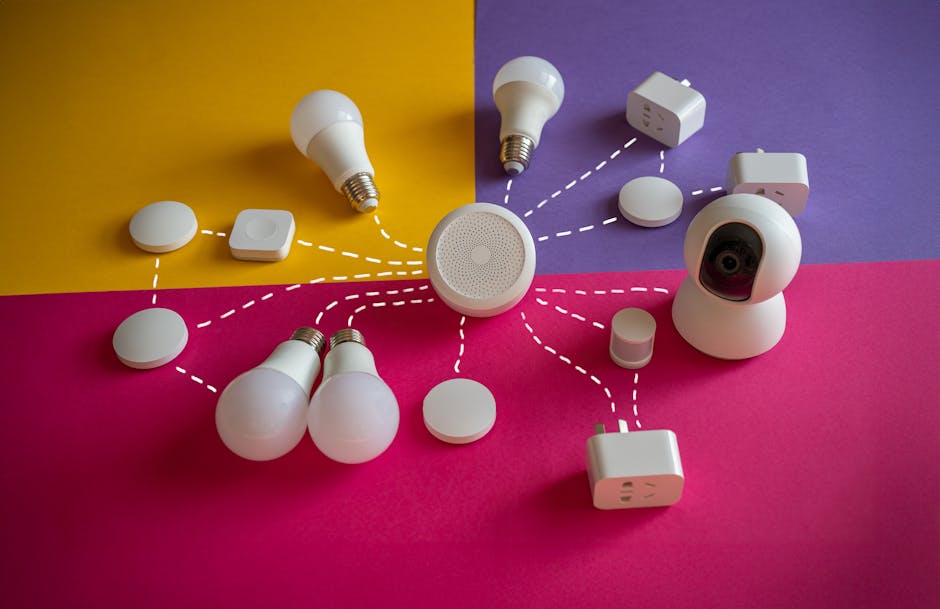
The smart home category has matured enough to separate into two very different populations of products. The first genuinely improves how a home functions: reducing energy costs, providing real convenience, or solving problems that previously required ongoing manual attention. The second creates the appearance of technological sophistication while adding complexity, requiring maintenance, and sometimes degrading the reliability of systems that worked fine without them.
The challenge for homeowners is that these two populations are packaged and marketed nearly identically. Both come with apps, both connect to voice assistants, and both are sold with the language of innovation and convenience. Distinguishing between them requires clarity about what problem you are actually trying to solve and whether the technology in question solves it better than simpler alternatives.
1. The Framework for Evaluating Smart Home Products
Before evaluating any specific smart home product, a simple decision framework eliminates the majority of purchases that will be regretted.
Start with the problem. What specific friction or inefficiency does this product address? If the answer requires effort to articulate, the problem may not be significant enough to justify the solution. Genuine smart home value comes from addressing real, recurring friction: the energy cost of a poorly controlled HVAC system, the inconvenience of managing multiple separate lighting switches, the risk of a water leak going undetected.
Then ask whether the product actually solves the problem better than the non-smart alternative. A smart lock that requires a phone to open is not necessarily more convenient than a regular lock if the phone is always in a bag or pocket anyway. A smart coffee maker that starts brewing on a schedule is not more valuable than a regular coffee maker with a timer function at a quarter of the price. The “smart” designation adds value only when the connectivity or automation it enables produces an outcome the non-smart version cannot achieve.
Finally, ask about reliability dependency. A smart home product that requires a working internet connection, a functional app, a specific hub, and regular firmware updates to perform its basic function has multiple failure points that a simple mechanical alternative does not. For critical home functions, added complexity means added failure risk.
2. Smart Thermostats: The Clearest Value Proposition
Smart thermostats are the smart home product with the most consistently demonstrated return on investment and the strongest case for adoption across the broadest range of homes.
The value proposition is specific and measurable. A smart thermostat that learns occupancy patterns and adjusts heating and cooling automatically, rather than maintaining a fixed schedule or requiring manual adjustment, reduces HVAC energy consumption in ways that can be measured directly in reduced utility bills. Nest has reported average energy savings of ten to twelve percent on heating and fifteen percent on cooling for their thermostat users, figures that are supported by independent analysis and that translate to real dollar savings in most homes.
The additional features of smart thermostats, including remote control from a phone, integration with weather data to anticipate heating and cooling needs, and detailed energy usage reporting, are genuinely useful rather than decorative. The ability to adjust the home temperature before arriving, to confirm that the HVAC is not running unnecessarily while traveling, and to understand which behaviors drive energy costs provides practical value that simpler thermostats cannot offer.
Installation is within the capability of most homeowners with basic electrical familiarity, and the upfront cost is typically recovered in energy savings within two to three years in most climates.
3. Smart Lighting: Where It Makes Sense and Where It Does Not
Smart lighting is one of the most marketed smart home categories and one of the most variable in actual value. The use cases where it delivers genuine benefit are specific, and the use cases where it adds cost and complexity without meaningful return are numerous.
The genuine value cases for smart lighting are primarily three. Automated scheduling that turns lights on and off based on occupancy or time of day, eliminating the energy waste of lights left on in unoccupied spaces, provides real savings and genuine convenience. Color temperature adjustment that shifts lighting from energizing cool-white during the day to relaxing warm-white in the evening, without requiring manual bulb changes, provides the circadian lighting benefits discussed elsewhere. Exterior lighting automation that responds to motion and time of day improves both security and convenience in ways that manual switches cannot match.
The cases where smart lighting adds more complexity than value are equally specific. Individual smart bulbs in fixtures that are turned on and off by wall switches are unreliable: turning off the wall switch cuts power to the bulb and makes it unresponsive to app or voice control. Smart switches are a better solution for rooms with standard overhead fixtures. And elaborate multi-zone lighting systems for rooms where simple overhead lighting serves perfectly well add cost and complexity without proportional benefit.
4. Smart Security: The Products That Deliver Versus Those That Disappoint
Home security technology has been transformed by connected cameras, smart doorbells, and integrated monitoring systems in ways that deliver genuine value for many homeowners.
Video doorbells have the strongest universal case in the security category. The ability to see and communicate with anyone at the door from any location, to receive motion alerts, and to maintain a video record of activity at the entrance is genuinely useful in ways that extend well beyond security into package delivery management, visitor coordination, and general awareness of entry activity. The products from established manufacturers are reliable, well-supported, and provide real-world value that casual users and security-conscious homeowners alike find worth the investment.
Indoor and outdoor cameras provide value proportional to the specific security concerns of the homeowner. For homes in areas with higher property crime rates, or for homeowners who travel frequently, the monitoring and deterrence value of a quality camera system is real and meaningful. For homeowners in low-crime areas who are rarely away, the monitoring value is lower and the privacy implications deserve more weight in the decision.
Smart locks have a more conditional value proposition. For homeowners who frequently need to provide temporary access to housekeepers, contractors, or guests, a smart lock with code management capability is genuinely convenient. For homeowners without this specific need, the added complexity and battery dependency of a smart lock provides marginal benefit over a standard lock.
5. The Water and Leak Detection Category That Saves Real Money
Water damage is among the most expensive home insurance claims and among the most preventable with early detection. Smart water sensors and leak detection systems represent one of the highest-return smart home investments available to most homeowners precisely because the problem they prevent is significantly more expensive than the cost of the solution.
Inexpensive smart water sensors placed under sinks, near water heaters, adjacent to washing machines, and in basements or crawl spaces where water infiltration can occur provide alerts when moisture is detected. These sensors cost very little individually and require minimal setup. The potential return, a single prevented water damage incident, can easily exceed the cost of a complete sensor system for the entire home.
More sophisticated whole-home water monitoring systems that attach to the main water supply and monitor flow patterns can detect slow leaks that sensors in specific locations would miss, and can automatically shut off water supply when anomalous flow is detected. These systems are a more significant investment but are worth considering for homeowners with older plumbing infrastructure or previous water damage experience.
6. The Smart Home Products to Skip
Several popular smart home product categories consistently disappoint relative to their marketing promises and cost.
Smart appliances, including refrigerators that display recipes and washing machines that can be started remotely, add significant cost at purchase and create software dependency for a product expected to last fifteen or more years. The convenience benefits are marginal: the ability to start the washing machine from another room is useful only if you have also loaded it from another room, which remains impossible.
Smart plugs and power strips that monitor energy usage of individual appliances provide interesting data but rarely produce behavior changes that justify the cost. The appliances that consume significant standby power, primarily older televisions and entertainment systems, are better addressed through smart power strips that cut standby power automatically than through monitoring that requires manual action in response to data.
Complex whole-home automation systems that integrate lighting, security, HVAC, entertainment, and other systems into a single control interface typically require professional installation, ongoing professional maintenance, and substantial investment. For most homeowners, the integration value does not justify the complexity and cost premium relative to individually managed smart systems in each category.
7. The Installation and Network Foundation That Everything Depends On
Smart home products are only as reliable as the network infrastructure they run on. A Wi-Fi network that covers the home adequately and consistently is the foundation that determines whether smart home products work reliably or frustratingly.
Mesh Wi-Fi systems that provide consistent coverage throughout the home, including garages, basements, and outdoor areas where smart devices are often placed, are the most important infrastructure investment for a smart home. A strong, consistent Wi-Fi signal eliminates the majority of connectivity problems that make smart home devices unreliable.
Organizing smart home devices into a separate network segment from personal computers and phones, a capability available in most modern routers, provides both security and network management benefits. Smart home devices vary considerably in their security practices, and isolating them from primary computing devices reduces the risk that a compromised device creates.
Conclusion
Smart home technology is worth buying selectively, based on genuine problems that specific products solve measurably better than simpler alternatives. Smart thermostats, targeted lighting automation, video doorbells, and water detection sensors consistently deliver real value. Complex integration systems, smart appliances, and products where the “smart” feature solves a problem that does not actually exist in your home consistently disappoint. The framework is not skepticism toward smart home technology but rather disciplined clarity about what specific problem each purchase is solving and whether it solves it well enough to justify the cost and complexity it adds.
Last modified: June 14, 2026