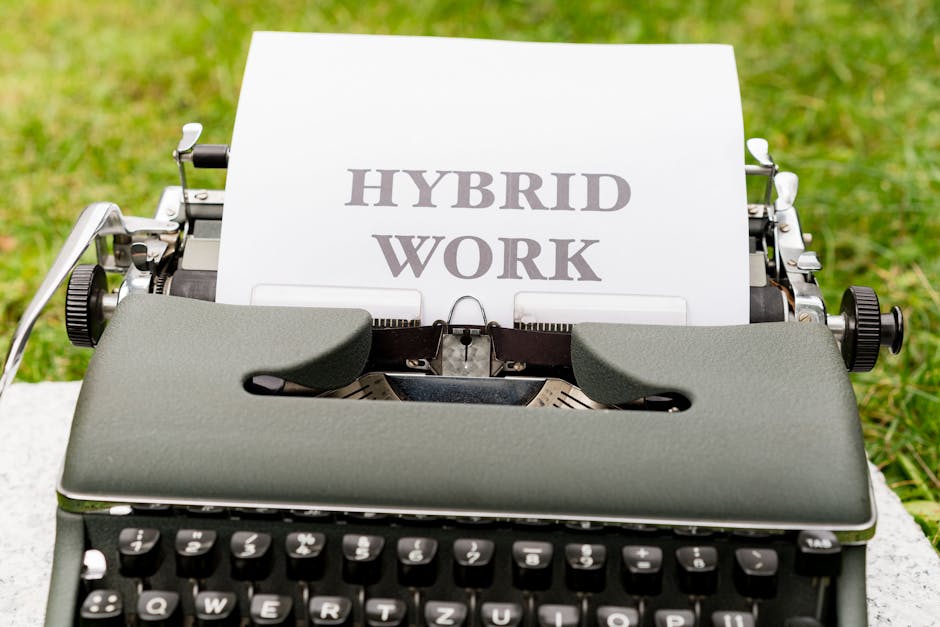
The 9-to-5 workday wasn’t designed for knowledge workers. It was designed for factory shifts. Yet most remote teams still organize their entire workday around synchronized schedules — constant availability, back-to-back meetings, instant replies expected. That’s not remote work. That’s office work with a webcam.
The async-first mindset flips that entirely. And the teams adopting it aren’t just happier — they’re measurably more productive.
1. What “Async-First” Actually Means
Async-first doesn’t mean never communicating in real time. It means real-time communication is the exception, not the default. Every message, update, or decision gets documented in a way that doesn’t require everyone to be online simultaneously.
Think of it this way. If your team can’t function unless everyone logs on at the same time, you haven’t built a remote team. You’ve built a distributed office. The distinction matters more than most people realize.
2. Why Synchronous Work Is Costing You More Than You Think
Here’s the uncomfortable truth: the average knowledge worker is interrupted every 11 minutes, according to research from the University of California, Irvine. After each interruption, it takes roughly 23 minutes to return to deep focus.
Do the math on a team of ten people attending four daily meetings. You’re not just losing meeting time. You’re burning the recovery time on either side of every single session. That’s an enormous hidden tax on your team’s actual output.
Furthermore, synchronized schedules quietly exclude your best thinkers. Deep work — the kind that produces real breakthroughs — requires uninterrupted blocks of time. Constant availability and deep work are fundamentally incompatible. You simply cannot have both.
3. The Core Habits of Async-First Teams
Shifting to async isn’t about banning meetings. It’s about changing your team’s default instinct. Instead of “let’s hop on a call,” the first question becomes: “can this be communicated in writing?”
Specifically, async-first teams build three non-negotiable habits:
- Documented decisions: Every significant choice gets written down with context, alternatives considered, and rationale explained.
- Status updates by default: Progress is shared proactively through written updates, not extracted through check-in calls.
- Time-boxed real-time sessions: When synchronous meetings do happen, they have a clear agenda, a defined outcome, and a hard end time.
These habits aren’t complicated. But they require intentional effort to build, especially if your team is coming from a traditional office culture.
4. Tools Are Secondary — Mindset Is Primary
A lot of teams mistake tool adoption for cultural change. They install Notion, switch to Loom for video messages, and set up a structured Slack channel system. Then nothing really changes because the underlying assumption — “I need an immediate answer” — stays intact.
The real shift is psychological. Async-first teams train themselves to tolerate response delays. A message sent at 9 AM might get answered at 2 PM. That’s not neglect. That’s respect for focused work time. Consequently, trust becomes the real infrastructure of an async team, not software.
That said, the right tools do make async communication dramatically smoother. Loom replaces synchronous walkthroughs with recorded video explanations. Notion or Confluence becomes the single source of truth for decisions and processes. Linear or Asana tracks work without requiring a status meeting to understand what’s happening.
5. The Manager’s Role Completely Transforms
Async-first work changes what great management looks like. In a synchronous culture, a good manager is visible, responsive, and present. In an async culture, a great manager is a brilliant communicator in writing.
They write clear, unambiguous briefs. They document expectations before work begins rather than correcting after. They create systems that let their team make good decisions independently. As a result, they spend far less time managing and far more time actually leading.
This is a harder skill to develop than most managers expect. Writing precisely enough that no follow-up question is needed takes real practice. But the teams managed by people who master it consistently outperform those that don’t.
6. Async-First Unlocks Global Talent
One underrated benefit of async-first work is what it does to your hiring pool. When real-time availability isn’t required, geography becomes irrelevant. Suddenly you can hire the best person for the role — not just the best person within commuting distance or within two time zones.
Companies like GitLab and Automattic have operated async-first for years. GitLab’s entire company handbook is public. Their async culture lets them hire across 65+ countries without sacrificing coordination or speed.
That’s not a coincidence. It’s a direct result of building async communication into the DNA of how they work — not as a remote work perk, but as a core operational principle.
7. The Transition Isn’t Instant — And That’s Fine
Shifting from synchronous to async-first takes time. Expect resistance, especially from team members who equate visibility with productivity. Some people genuinely feel more secure when they can reach someone instantly. That feeling is understandable and worth addressing directly.
The most effective transition happens in phases. Start by converting one recurring meeting per week into a written async update. Measure whether the outcome suffers. It almost never does. Then expand from there. Gradually, your team builds the muscle of communicating without real-time back-and-forth.
One underrated tactic: establish explicit “response windows.” Instead of expecting instant replies, agree as a team that messages will be answered within a defined timeframe — say, four hours during working hours. This removes the anxiety of silence without bringing back the pressure of constant availability. It’s a small policy change that produces an outsized cultural shift.
Additionally, celebrate async wins publicly. When a well-written brief eliminates a meeting, call it out. When a Loom video replaces a 45-minute call, acknowledge it. Culture changes through repeated reinforcement, not policy alone.
Conclusion
The 9-to-5 is fading not because people are lazy — but because the best workers have realized it was never optimized for thinking. The async-first mindset isn’t a trend. It’s a structural upgrade to how modern teams operate. It protects deep work, expands hiring reach, and — perhaps most importantly — treats everyone’s time as genuinely valuable. That’s not just better for business. It’s better for the people doing the work.
Last modified: September 5, 2026