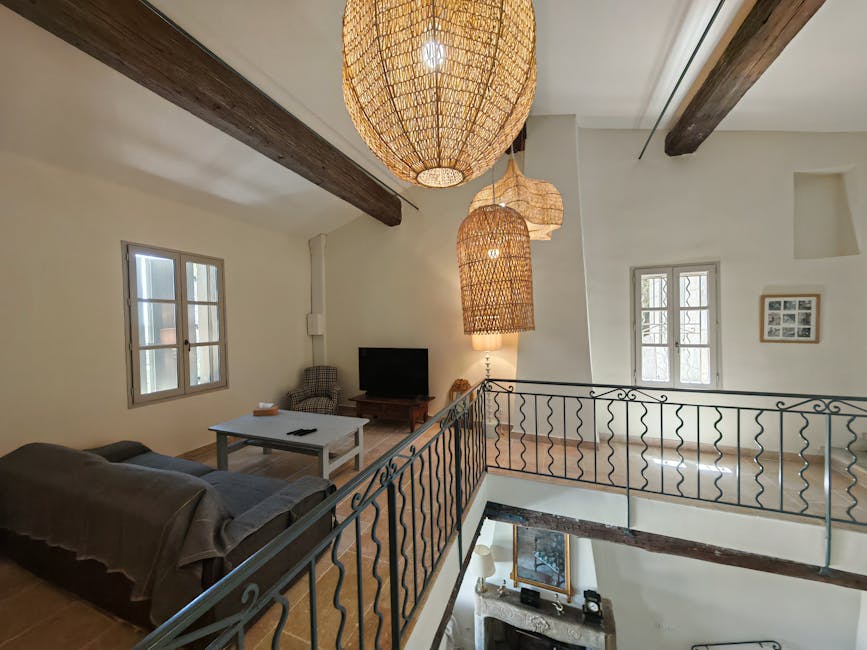
There is a category of home upgrade that gets almost no social media attention. It does not photograph well. It does not generate compliments from guests. It will never appear in a design magazine or generate likes on Instagram. And yet it is responsible for the most significant improvements in how a home actually functions, how comfortable it feels to live in, and how well its value holds over time.
These are the invisible upgrades: the improvements that work silently in the background of daily life, solving problems so completely that the problem is forgotten rather than appreciated. Understanding what they are, and why they consistently outperform the visible upgrades that attract most attention and budget, is one of the most practically useful things a homeowner can internalize.
1. The Visible Upgrade Trap
The home improvement industry is structured around visibility. Kitchen renovations, bathroom remodels, fresh paint colors, and new flooring are the improvements that feature prominently in home improvement media because they are photogenic and emotionally satisfying in ways that feel immediate.
There is nothing wrong with visible improvements. A well-designed kitchen genuinely improves daily life and adds real value. But visible upgrades attract disproportionate attention and budget relative to their impact on how a home actually feels to live in day to day. They are also the upgrades that homeowners frequently over-invest in relative to the fundamentals underneath them.
The trap is spending significant money on visible improvements while the invisible systems that make the home comfortable and functional are degraded, inefficient, or failing. A beautifully renovated kitchen that sits in a house with inadequate insulation, failing weatherstripping, and an aging HVAC system is a home that looks good in photographs and feels uncomfortable to live in eight months of the year.
2. Insulation: The Upgrade That Works Twenty-Four Hours a Day
If there is a single invisible upgrade with the highest consistent return on investment for most homes, it is insulation. Proper insulation works continuously, every hour of every day, reducing the energy required to maintain comfortable indoor temperatures. Its benefit compounds over time and never requires maintenance or replacement.
Most homes built before the 1980s are significantly under-insulated by current standards, and a meaningful proportion of homes built after that period are also under-insulated in critical areas. Attic insulation is the highest-priority area in most homes because heat rises and attic heat loss or gain represents a major component of heating and cooling load.
Attic insulation improvements are invisible by definition. They happen in a space nobody sees and they produce benefits that feel like absence rather than presence: the absence of cold floors in winter, the absence of rooms that never quite reach the thermostat temperature, the absence of the energy bill spike that used to accompany cold months. These are real improvements to daily comfort that produce no visible evidence of their own existence.
Adding insulation to an under-insulated attic is a project that professional installers can complete in a day, and in many markets it qualifies for energy efficiency incentives that reduce the net cost. The payback period in reduced energy costs is typically measured in years rather than decades.
3. Air Sealing: The Invisible Work That Insulation Cannot Do Alone
Insulation and air sealing are often discussed together but they address different problems. Insulation slows heat transfer through building materials. Air sealing prevents conditioned air from escaping and outdoor air from entering through gaps, cracks, and penetrations in the building envelope.
The two work together, and insulation without air sealing leaves significant performance on the table. A well-insulated attic that has un-sealed penetrations around plumbing pipes, electrical conduits, and light fixtures is still losing a significant volume of conditioned air through those gaps every hour.
Air sealing is among the least glamorous home improvements imaginable. It involves applying caulk, spray foam, and weatherstripping in attics, crawl spaces, and around penetrations that nobody ever sees. The work is painstaking, the materials cost almost nothing, and the result is entirely invisible. The experience of living in a properly air-sealed home, however, is qualitatively different from living in a leaky one: more even temperatures, fewer drafts, lower energy costs, and improved indoor air quality from reduced infiltration of outdoor pollutants.
4. Water Pressure and Plumbing Flow
Water pressure problems affect the daily experience of living in a home in ways that are constant and deeply annoying without ever rising to the level of a crisis that demands immediate attention. A shower with inadequate pressure, fixtures that drip due to worn internal components, and slow-draining sinks are the kind of persistent irritations that degrade quality of daily life without generating the urgency that prompts action.
A pressure-reducing valve that has failed or that was never calibrated correctly can produce either inadequate pressure that makes showers frustrating or excessive pressure that stresses pipe joints and accelerates fixture wear. Having it checked and adjusted if necessary is an invisible improvement with immediate daily impact.
Replacing aging fixture internals, particularly in toilets and faucets, eliminates the slow drips and inconsistent performance that waste water and create constant low-level annoyance. A running toilet can waste hundreds of gallons of water per day. The flapper valve responsible costs a few dollars and takes ten minutes to replace.
These are not the improvements that feature in renovation reveals. They are the improvements that make a home feel properly maintained and pleasant to use every day.
5. Electrical Infrastructure That Supports Modern Life
Electrical systems designed for homes of earlier decades were not designed for the electrical loads of contemporary life. Homes built before the 1990s frequently have fewer outlets than modern living requires, no GFCI protection in wet areas, and panel capacity that struggles with the combination of high-efficiency appliances, home offices, and electric vehicle charging that contemporary households now place on residential electrical systems.
Adding outlets in strategic locations, specifically in home offices, kitchens, and garages where the gap between available and needed outlets is most acute, eliminates the extension cord and power strip proliferation that most homes have accumulated as a workaround. This improvement is invisible in the sense that outlets are noticed only when they are absent. A room with well-placed, sufficient outlets simply works. A room without them is a constant source of friction.
Panel upgrades are a significant investment but one that silently enables everything else that requires adequate electrical capacity: fast EV charging, high-efficiency heat pump systems, and the growing electrical demands of modern homes. A panel that is at or near capacity creates constraints on other improvements and represents a real risk that most homeowners do not think about until a specific project forces the issue.
6. Acoustic Improvements That Change How a Home Feels
The acoustic quality of a home has a significant effect on the experience of living in it that is rarely discussed in home improvement contexts. Homes with poor acoustic performance, where sound travels freely between rooms and from outside, create a persistent background stress that occupants often attribute to other causes.
Sound insulation between rooms, particularly between bedrooms and common areas or home offices and living spaces, dramatically improves the quality of sleep, work, and privacy in a home. This improvement is entirely invisible and produces a benefit that is experienced as absence: the absence of being woken by activity in adjacent rooms, the absence of hearing every conversation from the home office, the absence of the vague feeling that the house does not provide real refuge.
Solid-core interior doors rather than the hollow-core doors that most production homes install provide a significant acoustic improvement at a moderate cost. The difference in the quality of privacy and quiet between a room with a hollow-core door and one with a solid-core door is perceptible immediately and appreciated daily.
7. The Return on Invisible Upgrades Over Time
The financial case for invisible upgrades, in addition to the comfort and quality-of-life case, is strong and underappreciated. Energy improvements have measurable payback periods that can be calculated. Plumbing and electrical improvements prevent the compounding costs of deferred maintenance and emergency repair. Acoustic and comfort improvements affect how long you want to live in a home and how much you and potential buyers will value it.
Home value is often discussed in terms of visible improvements: granite countertops, renovated bathrooms, curb appeal. But experienced homebuyers and their inspectors look carefully at invisible infrastructure. A home with excellent insulation, a properly functioning HVAC system, sound electrical and plumbing infrastructure, and no deferred maintenance issues commands a different kind of confidence than a beautifully decorated home with underlying systems that need attention.
The invisible upgrades are not glamorous. They do not generate the emotional satisfaction of a finished kitchen or a new bathroom. But they are the improvements that make the difference between a home that is genuinely comfortable, efficient, and well-maintained and one that looks good but costs more than it should to live in every single day.
Conclusion
The best home upgrades are the ones you stop thinking about once they are done because the problem they solved has been so completely resolved that it no longer exists. Insulation that keeps the temperature even, air sealing that eliminates drafts, plumbing that works quietly and efficiently, electrical infrastructure that meets modern demands without friction, and acoustic quality that makes the home feel genuinely restful: these are the improvements that transform how a home feels to live in. They deserve at least as much attention and budget as the improvements that photograph well. Usually, they deserve more.
Last modified: March 10, 2026