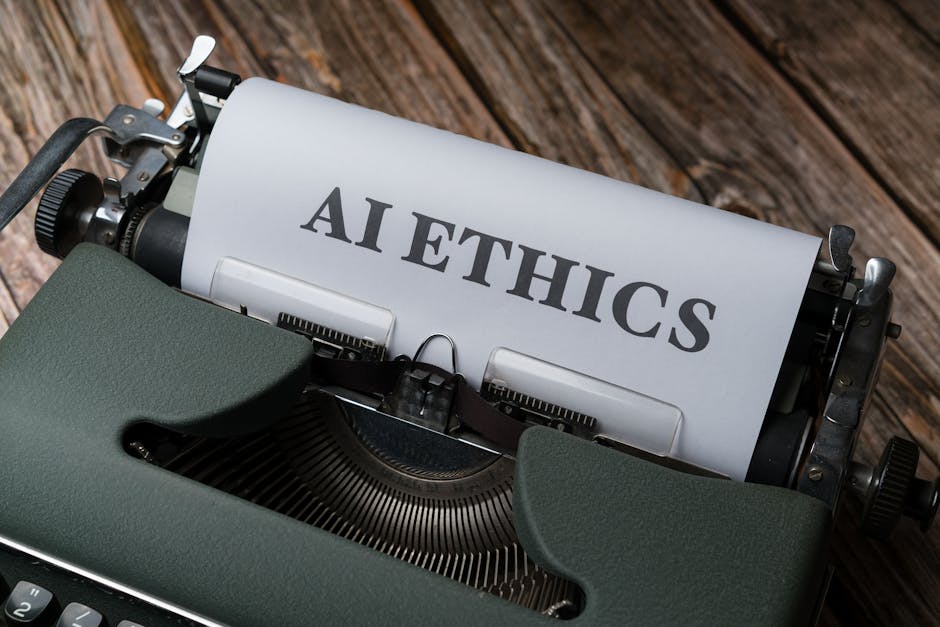
Three years ago, suggesting that a mid-sized business needed a dedicated AI ethics role would have seemed premature. Today, it is becoming one of the most urgent organizational gaps in the business landscape. AI systems are making consequential decisions in hiring, lending, healthcare, customer service, and content moderation. The organizations deploying these systems are legally, reputationally, and operationally exposed in ways many of them have not yet fully assessed.
The Chief AI Ethics Officer, or equivalent role by whatever title an organization chooses, is not a luxury for technology companies. It is an operational necessity for any business that is deploying AI systems or planning to.
1. The Risk Landscape That Created This Need
To understand why this role has become urgent, it helps to understand the specific risks that AI deployment without ethical oversight is creating for businesses right now.
Regulatory risk is the most immediately quantifiable. The European Union’s AI Act, which entered into force in 2024, imposes significant obligations on organizations deploying AI systems, including transparency requirements, conformity assessments for high-risk AI applications, and restrictions on certain uses of AI entirely. Organizations operating in the EU that are not prepared for these requirements face substantial fines. Similar regulation is developing in the United Kingdom, Canada, Brazil, and increasingly in US states.
Reputational risk is often larger in practice than regulatory risk. An AI system that produces discriminatory outputs, generates harmful content, makes erroneous consequential decisions, or behaves in ways that violate user trust can generate news coverage and social media attention that damages a brand in ways that take years to repair. Several high-profile corporate AI failures in hiring algorithms and facial recognition systems have demonstrated how quickly an AI ethics failure can become a mainstream story.
Legal liability risk is growing as courts begin to grapple with questions of responsibility for AI-caused harms. The legal frameworks are still forming, but the direction of travel is toward holding organizations accountable for the behavior of AI systems they deploy, regardless of whether those systems were built in-house or by third parties.
2. What a Chief AI Ethics Officer Actually Does
The title sounds abstract. The actual responsibilities are concrete and operationally grounded.
The most important function is governance: establishing the policies, frameworks, and review processes that determine how AI systems are evaluated, approved, monitored, and retired. This includes defining what kinds of AI applications require ethical review before deployment, what standards those reviews apply, and what remediation is required when a deployed system produces problematic outputs.
The second major function is risk assessment. AI systems can produce biased, harmful, or simply incorrect outputs in ways that are not always visible in development but become apparent at scale. Systematic assessment of these risks before deployment, using techniques like bias testing, adversarial testing, and impact assessment, is a core responsibility.
The third function is stakeholder communication: ensuring that customers, employees, regulators, and investors have appropriate transparency about how AI systems are being used and what protections are in place. This communication function is increasingly important as regulatory disclosure requirements expand.
3. The Organizational Placement Question
Where the AI ethics function sits in an organization significantly affects its effectiveness. Placing it within the legal or compliance function gives it authority but can create a gatekeeping dynamic that slows innovation. Placing it within the technology function gives it proximity to the systems being built but can create conflicts of interest when ethics assessments slow development timelines.
The most effective placements tend to be either as an independent function reporting directly to the CEO or board, or as a cross-functional role with formal authority to review and pause deployments rather than merely advisory power. An ethics function that can be overridden easily by business units under commercial pressure is not an ethics function. It is a checkbox.
The reporting structure matters because it signals organizational seriousness. A Chief AI Ethics Officer with board-level access and genuine authority sends a different message to employees, regulators, and customers than an ethics team buried in a legal department with limited operational influence.
4. Skills and Background the Role Requires
The ideal Chief AI Ethics Officer brings together competencies that rarely coexist in a single professional background, which is why the role is difficult to fill and why many organizations are currently doing it poorly.
Technical literacy is necessary but not sufficient. The role requires enough understanding of how AI systems work to have substantive conversations about how they can fail, be gamed, or produce unintended outputs. This does not require deep engineering expertise but does require more than a surface-level familiarity with AI concepts.
Domain expertise in ethics, law, or social science provides the conceptual frameworks for identifying and evaluating harms. Professionals with backgrounds in philosophy, law, sociology, or public policy bring the analytical rigor that purely technical professionals often lack in this domain.
Organizational influence skills complete the profile. An AI ethics officer who cannot persuade business leaders to accept constraints on AI deployment is not doing the job. The role requires the interpersonal credibility and communication skills to make ethical considerations a real factor in business decisions rather than a compliance exercise performed after the important decisions have already been made.
5. Building an AI Ethics Function Without a Full-Time Hire
Not every organization has the scale or budget to hire a dedicated Chief AI Ethics Officer immediately. But every organization deploying AI needs some version of this function operating, even in a minimal form.
The practical minimum is an AI ethics review process: a defined set of questions that any AI deployment must answer before going live, a designated person or group responsible for conducting that review, and a clear escalation path when a deployment raises concerns that require senior judgment.
Organizations can also leverage external resources: AI ethics consulting firms, industry frameworks like the NIST AI Risk Management Framework published in 2023, and legal counsel with AI regulatory expertise. These resources are not substitutes for internal capability but can provide the structure and expertise needed while an internal function is being built.
6. How AI Ethics Creates Competitive Advantage
The AI ethics conversation often focuses on risk mitigation, but the function also creates genuine competitive advantage for organizations that invest in it seriously.
Customer trust is increasingly a differentiator in markets where AI use is visible to end users. Organizations that can credibly demonstrate responsible AI practices, through transparent disclosure, independent auditing, and clear accountability structures, attract customers and partners who care about these issues, a group that is growing rapidly as AI becomes more visible in daily life.
Regulatory preparedness is a competitive advantage as compliance requirements expand. Organizations that have built ethics infrastructure ahead of regulatory requirements can deploy AI in regulated contexts faster than competitors who are scrambling to build compliance capability in response to new rules.
Talent attraction is a third advantage. Many of the most skilled AI professionals actively choose employers based on the ethical standards of their AI development practices. Organizations with credible ethics functions attract a different caliber of technical talent than those without.
7. Starting the Conversation in Your Organization
If your organization is deploying AI systems without any formal ethics oversight, the most important first step is simply acknowledging the gap. The second step is conducting an inventory of AI systems currently in use and assessing the potential for each to cause harm, discriminate, or violate user trust.
That inventory will usually reveal that some deployments carry more risk than others and should be prioritized for review. It also gives leadership a concrete view of the AI ethics exposure the organization currently carries, which is typically the most effective catalyst for building the function seriously.
Conclusion
The Chief AI Ethics Officer role is not a response to future risk. It is a response to present reality. Organizations are deploying AI systems today that are making consequential decisions about people, without adequate frameworks for ensuring those decisions are fair, accurate, and aligned with the organization’s own stated values. Building the ethics function now, before a failure forces the issue, is both the responsible and the strategically sound choice. The organizations that figure this out early will be better positioned for the regulatory, reputational, and competitive landscape that is already forming.
Last modified: April 6, 2026