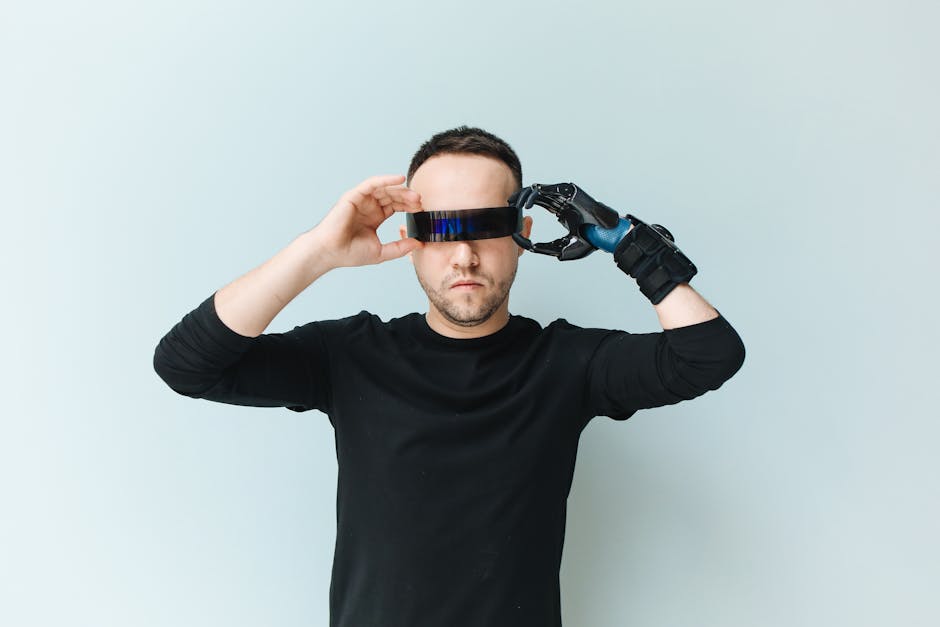
For most of the history of consumer technology, accessibility was an afterthought. Devices and software were designed for the assumed default user, and adaptations for people with disabilities were added later, incompletely, as compliance requirements demanded. The result was technology that worked well for some and worked poorly or not at all for many.
That paradigm is changing. A combination of improved technology, stronger advocacy, evolving regulation, and a growing recognition that accessible design is good design for everyone is moving accessibility from the margins to the center of technology development. The next frontier of accessibility tech is not a niche. It is where some of the most consequential and commercially significant technology innovation is happening right now.
1. The Scale of the Opportunity
The business case for accessible technology starts with numbers that most technology companies have historically underweighted. According to the World Health Organization, approximately 1.3 billion people globally live with significant disability. In the United States alone, people with disabilities represent a consumer market with an estimated annual spending power of over 490 billion dollars.
These numbers do not fully capture the market because accessibility benefits extend far beyond people with permanent disabilities. Situational limitations create temporary accessibility needs for everyone: a parent holding a child, a person in a loud environment who cannot hear audio, someone in bright sunlight who cannot read a low-contrast screen, a driver who cannot look at a device. Designing for permanent disability consistently produces features that serve situational and temporary limitations as well.
The curb cut effect, named for the observation that curb cuts designed for wheelchair users are used by people with strollers, cyclists, delivery workers, and travelers with luggage, captures this dynamic. Accessible design is not a specialized accommodation. It is better design that benefits everyone.
2. AI as an Accessibility Multiplier
Artificial intelligence is the technology with the largest near-term potential to expand accessibility. AI-powered capabilities are addressing barriers that have historically been extremely difficult to bridge with technology.
Real-time speech recognition and captioning, now available on consumer devices with sufficient accuracy to be genuinely useful for Deaf and hard-of-hearing users, is one of the most impactful current applications. Google’s Live Caption feature, available across Android and ChromeOS, processes speech locally and generates captions with low latency that make video and audio content accessible without requiring pre-produced captions.
AI-powered image description, which generates text descriptions of visual content for blind and low-vision users, has improved dramatically. Microsoft’s Seeing AI app and similar tools provide descriptions of scenes, objects, text in images, and people’s expressions that give blind users contextual information that was previously unavailable without human assistance.
Predictive text and communication assistance tools are transforming communication for people with motor impairments, speech differences, and cognitive disabilities. Systems that learn individual users’ vocabulary and communication patterns and offer increasingly accurate predictions reduce the effort required to communicate through alternative and augmentative communication devices by orders of magnitude.
3. Sensory Technology Breaking New Ground
Assistive technology for sensory disabilities is advancing rapidly beyond the incremental improvements of previous decades.
Cochlear implants are becoming more sophisticated, with improved sound processing algorithms, wireless connectivity, and AI-powered adaptation to different listening environments. The experience of cochlear implant users, while still different from natural hearing, continues to improve with each generation of technology. Research into direct auditory cortex stimulation may eventually bypass the cochlear implant altogether for some users.
Visual prosthetics are moving from early laboratory demonstrations toward clinical applications. Bionic eyes that convert visual information into electrical signals that stimulate the visual cortex directly are in clinical trials, offering the prospect of restored light perception and coarse visual information for people with certain types of blindness that no previous technology could address.
For blind users navigating the physical world, AI-powered smartphone apps are providing increasingly sophisticated real-time guidance. Apps like Microsoft Soundscape and Lazarillo use spatial audio and AI-powered scene understanding to provide navigational information in formats that complement rather than replace existing orientation and mobility skills.
4. Motor Accessibility and the Interface Revolution
Motor impairments create accessibility challenges at the most fundamental level of device interaction. Traditional interfaces require precise physical manipulation that is impossible or extremely difficult for many users with motor disabilities.
Eye-tracking technology has matured to the point where it is a viable primary input method for users who cannot use traditional keyboards or touchscreens. Tobii and other eye-tracking providers offer consumer-accessible devices that enable computer control through gaze, giving users with severe motor impairments full access to digital technology.
Brain-computer interfaces represent the most ambitious frontier in motor accessibility. Neuralink’s clinical trials and competing research programs are investigating whether direct neural interfaces can provide reliable, high-bandwidth communication for people with severe motor impairments. The near-term applications are focused on restoring communication for people with locked-in syndrome and similar conditions rather than enhancement for the general population.
Switch access, voice control, and head tracking have all improved substantially as underlying AI technology has improved. The combination of better speech recognition, more robust voice control systems, and AI that can understand intent from incomplete or imprecise input has made voice-primary computing significantly more viable for users with motor impairments than it was five years ago.
5. Cognitive Accessibility: The Least Addressed Frontier
While sensory and motor accessibility have received increasing attention, cognitive accessibility remains the least developed area of accessibility technology. Cognitive disabilities affect a broad range of people including those with learning disabilities, acquired brain injuries, neurodegenerative conditions, and neurodivergent individuals, and the technology to support them is significantly less mature.
Plain language tools that automatically simplify complex text, navigation systems that reduce cognitive load through simplified interfaces and reduced choices, and reminder and executive function support tools are all areas of active development. AI systems that can adapt their communication complexity to the individual user’s needs in real time represent a significant opportunity that is only beginning to be explored.
Neurodivergent users, including those with autism spectrum conditions and ADHD, have specific technology needs that mainstream design largely ignores. Reducing sensory overload through customizable interface design, supporting different attention and executive function profiles, and enabling communication in formats that match individual preferences rather than assumed norms are all design challenges where accessible technology can make a substantial difference in quality of life.
6. Regulatory Pressure Accelerating the Field
Regulatory requirements are playing an increasingly important role in driving accessibility technology adoption and development. The European Accessibility Act, which requires digital products and services sold in the EU to meet accessibility standards from June 2025, is creating significant market pressure for companies that have historically treated accessibility as optional.
In the United States, the Americans with Disabilities Act has been increasingly applied to digital contexts, with courts finding that websites and apps constitute public accommodations subject to accessibility requirements. Legal risk is concentrating the minds of product leaders in ways that advocacy alone has not.
These regulatory pressures are creating a commercial environment where accessibility investment has become risk management as well as values expression. The combination is driving faster and more sustained accessibility improvements than either motivation produced on its own.
7. Designing Accessibility In From the Start
The most important shift happening in accessible technology development is the movement from retrofitting accessibility to integrating it from the beginning of product development. Retrofitting accessibility onto a product designed without it is expensive, technically constrained, and produces inferior results. Designing for accessibility from the start produces better products for everyone at lower incremental cost.
Organizations at the forefront of this shift are embedding accessibility expertise in their core product teams, conducting accessibility testing with disabled users throughout development rather than at the end, and adopting design systems built on accessible foundations that propagate accessibility across all product surfaces.
Conclusion
The next frontier in accessibility tech is not a charitable endeavor separate from mainstream innovation. It is where some of the most technically demanding and commercially significant problems in technology are being solved, with solutions that benefit the broadest possible range of people. The organizations that design for everyone from the start are building better products, accessing larger markets, and reducing legal risk simultaneously. Accessibility is not a constraint on technology design. It is a measure of how well technology design is actually working.
Last modified: May 27, 2026